
Ensuring dependability, safety, and long-term performance are more important aspects of a secure electrical connection than simply connecting wires. The proper wire terminal keeps circuits stable and avoids risks like shorts, loose connections, or system failures, whether you’re working on automotive, marine, industrial, or do-it-yourself applications.
Seven of the most popular terminal types are broken down below, along with information on when to use them, the problems they address, and the significance of each design.
1. Butt Connectors
When splicing two wires end-to-end with a strong, permanent connection, butt connectors are the solution.
Butt connectors offer a neat, inline splice. They are easy to use, safe, and come in heat-shrink, insulated varieties to increase moisture resistance and durability. Uninsulated versions are available for high heat or custom applications. With a double-ended female design, they are the preferred option for simple connections between two wires.

PRO: Creates a strong, permanent splice between two wires.
CON: Not reusable. Once crimped, it must be cut off to remove.
2. Push-On Terminals
Push-On Terminals are used for frequently connecting and disconnecting a wire from a blade-style male terminal quickly and securely.
Available in heat shrink, nylon-insulated, vinyl-insulated, non-insulated, piggyback, and high-temperature varieties, push-on terminals are perfect in situations where parts may require regular maintenance or replacement, as they ensure quick and secure connections between male and female terminals. The quick blade-style connections are commonly used in automotive wiring, making push-on terminals suitable for components like relays and even some fuse blocks that utilize spade-type connectors.

PRO: Fast to connect and disconnect for servicing.
CON: Less secure under heavy vibration unless properly insulated or heat-shrinked.
3. Ring Terminals
Ring terminals are used for the most secure, vibration-proof connection to a stud or screw.
With a ring-shaped end that completely encircles a bolt, they cannot come loose once the fastener is tightened. They are perfect for attaching wires to screws or studs, guaranteeing a strong, impenetrable connection with multiple insulation options. Ring terminals provide a secure, stud mounted connection ideal for fuse blocks, terminal strips, and power distribution points because their closed loop design ensures they stay fastened under screws or studs commonly used in these components.
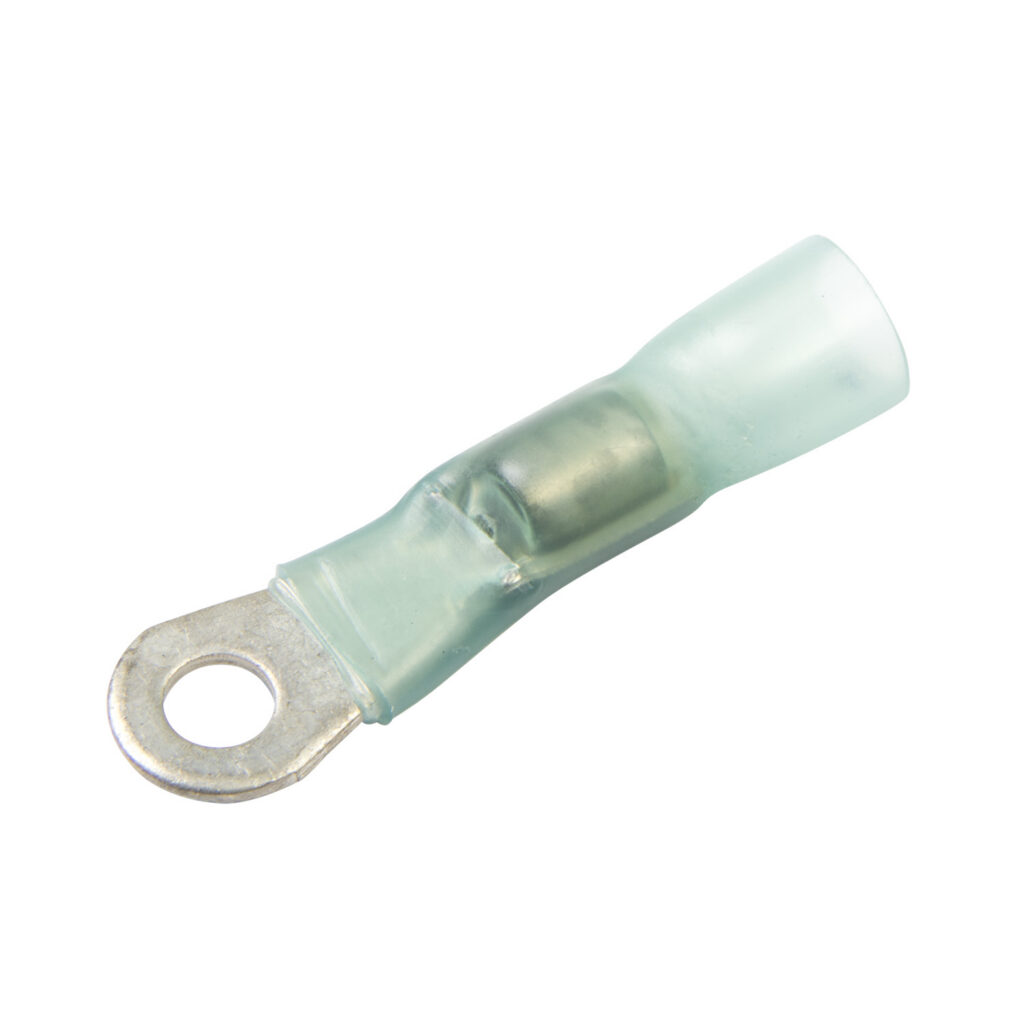
PRO: Most secure connection, it cannot slip off once the screw or stud is tightened.
CON: Requires full screw removal to install or remove, slowing maintenance.
4. Spade Terminals
Spade terminals are used to replace or remove the wire without removing the screw entirely, while keeping a secure connection to a screw terminal.
The fork-shaped spade terminals make it simple to install and remove screws and come in a variety of insulation options. They offer easy installation and removal in tight spaces, which makes them perfect for situations where accessibility and speed are crucial.
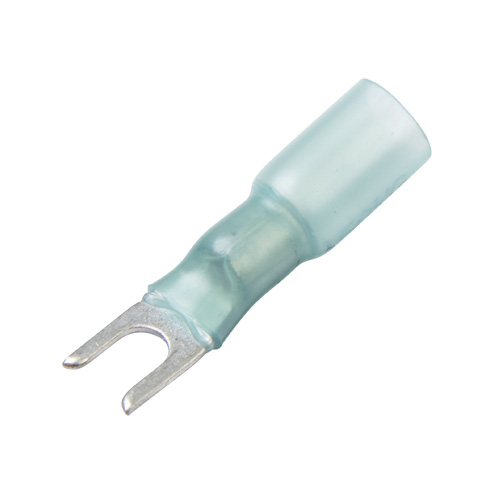
PRO: Easy to install without fully removing the screw.
CON: More likely to loosen or slip off than ring terminals in high-vibration environments.
5. Hook Terminals
Hook shaped terminals are used when you want easier installation than a ring terminal, but more security than a spade.
This hook terminal comes in nylon and non-insulated options and provide a semi‑closed connection point that hooks around as screw or stud. They provide a balance between convenience and security, making them appropriate when you need a straightforward but dependable attachment, even though they are not as tamper-proof as rings.

PRO: Quick to attach and remove, more secure than spades.
CON: Still not as vibration-resistant as a fully closed ring terminal.
6. Bullet Connectors
Bullet connectors are used when strong, gendered connections, that can withstand frequent plugging and unplugging are required because they offer a male-and-female design that fits securely for a durable connection. They are superior in situations where connection integrity is crucial, such as automotive wiring or frequently serviced harnesses and available in heat shrink, perma-seal heat shrink, nylon and vinyl varieties.

PRO: Strong, durable male/female connection that’s reusable.
CON: Bulky compared to other terminals, making them harder to use in tight spaces.
7. Pin Terminals
Pin terminals are used to connect stranded wire to a block terminal designed for solid wires.
They terminate the wire into a solid “pin,” allowing it to be inserted into clamp-style or terminal-block connection without fraying. With set-screw terminals, this offers a safer and cleaner interface and is available with nylon and vinyl insulation.
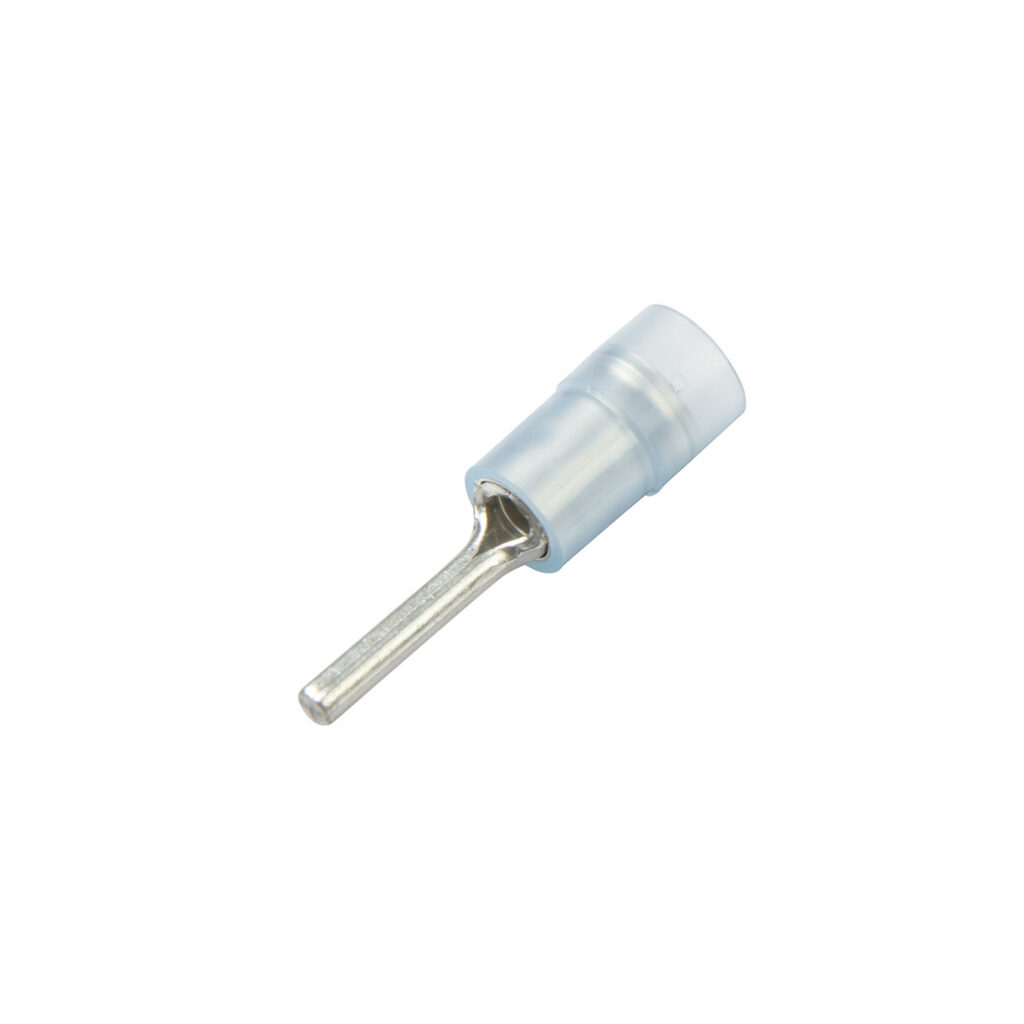
PRO: Provides clean, solid termination for stranded wire in terminal blocks.
CON: Not suitable for high-current or high-vibration applications requiring mechanical retention.
Selecting the appropriate terminal is just as crucial as selecting the appropriate wire. Factors like wire gauge, installation environment, insulation type, serviceability requirements, and vibration exposure all guide terminal selection. Every application has a safe, dependable solution thanks to Del City’s extensive selection, which includes both standard insulated connectors and specialty choices like heat-shrink or high-temperature terminals.
Terminal Type Comparison Chart
| Product Type | Primary Function | Connection Style | Typical Applications | Insulation Types |
|---|---|---|---|---|
| Butt Connectors | Splice two wires end‑to‑end for a permanent inline repair or extension | Inline female-to-female splice | Repairing cut or damaged wires Extending harnesses Creating clean splices in tight spaces | Heat shrink, nylon, vinyl, non-insulated, and high-temperature varieties |
| Push-On Terminals | Fast connect/disconnect to a blade terminal | Male/female blade pair | Connecting switches, relays, and speakers Applications needing maintenance access Situations requiring vibration resistant quick connects | Heat shrink, nylon, vinyl, non-insulated, piggyback, and high-temperature varieties |
| Ring Terminals | Most secure attachment to a stud/screw | Closed loop under screw/stud | Grounding wires Battery and power distribution connections High vibration environments (automotive, marine) | Heat shrink, nylon, vinyl, non-insulated, and high-temperature varieties |
| Spade Terminals | Quick screw‑terminal connection with easier removal than rings | Open fork under screw | Connecting to terminal strips Applications requiring frequent component swaps Tight spaces where a ring terminal is harder to install | Heat shrink, Perma-seal heat shrink, nylon, vinyl, non-insulated, and high-temperature varieties |
| Hook Terminals | Balance of convenience with more retention | Hook-shaped under screw/stud | Light‑duty screw‑terminal connections Quick wiring changes without full screw removal Low‑ to medium‑vibration environments | Nylon and non-insulated |
| Bullet Connectors | Durable, gendered mate that tolerates repeated connects/disconnects | Male bullet into female socket | Automotive and powersport lighting Modular accessory wiring High‑vibration applications needing reliable mates | Heat shrink, Perma-seal heat shrink, nylon and vinyl varieties |
| Pin Terminals | Terminate stranded wire to a solid pin for terminal blocks/clamp screws | Solid pin insertion under clamp/screw | Terminal strips, barrier strips, or European-style terminal blocks Control panels and industrial equipment Small-gauge electronics and low‑voltage systems | Nylon and vinyl |
Pairing the right terminal with the right crimping tool and technique will set your project up for long-term success with the safest, most robust electrical connections.
Explore our full selection Del City Wire Terminals to find the right terminals for your needs.