Reliable battery connections are essential for preventing electrical issues and ensuring dependable performance in vehicle wiring, marine electrical upgrades, and heavy equipment maintenance.
Although battery lugs and battery terminals are often overlooked components, they serve a critical role in delivering power from the battery to the rest of the electrical system. A poor connection can create resistance, generate heat, cause voltage drop, and ultimately lead to equipment failure.
In many cases, battery connection failures are caused by corrosion, loose connections, undersized terminals, improper crimping, and vibration damage. Selecting the proper lug or terminal for your application helps ensure maximum conductivity, improved reliability, and longer service life.
This guide covers the differences between battery lugs and battery terminals, material options, sizing considerations, installation methods, and common troubleshooting tips to help you choose the right solution for your application.
What Are Battery Lugs and Battery Terminals?
Although the terms are sometimes used interchangeably, battery lugs and battery terminals serve different functions within an electrical system.
Battery Lugs
Battery lugs are conductive connectors designed to terminate a cable and attach it to a stud-mounted electrical component. They create a secure, low-resistance connection capable of carrying high current loads.
Battery lugs are commonly found connecting battery cables to:
- Starter motors
- Solenoids
- Busbars
- Fuse blocks
- Grounding points
- Power distribution systems
Typically, most battery lugs feature a barrel that accepts the cable and a ring terminal that mounts to a stud or bolt. They are available in multiple cable sizes, stud sizes, and terminal angles to accommodate various installation requirements.
Battery Terminals
Battery terminals connect directly to the battery itself and serve as the primary interface between the battery and the electrical system.
Depending on the battery design, terminals may connect to:
- Top-post batteries
- Side-post batteries
- Stud-terminal batteries
- Lithium battery terminals
Like battery lugs, battery terminals are available in numerous styles to accommodate different cable routing requirements and electrical loads. Some designs allow multiple accessory connections while others focus on providing a simple, robust connection for starting and charging circuits.
Lug vs. Terminal Comparison Chart
| Feature | Battery Lug | Battery Terminal |
|---|---|---|
| Connects To | Studs, busbars, solenoids | Battery posts or studs |
| Typical Applications | Starting, charging, grounding | Direct battery connections |
| Available Angles | Straight, 45°, 90° | Straight, left, right, parallel |
| Installation Method | Crimp or solder | Crimp, solder, bolt-on |
| Common Industries | Automotive, marine, heavy equipment | Automotive, marine, RV |
Understanding Battery Lug and Terminal Materials
Choosing the proper material is just as important as selecting the correct size. Different environments and operating conditions require different levels of conductivity, corrosion resistance, and durability.
Electrical terminals are manufactured from a range of materials, each chosen to balance conductivity, strength, corrosion resistance, and cost. The most common material is copper, which offers excellent electrical conductivity and low resistance, making it ideal for high-current applications where efficiency and heat control are critical. However, because bare copper can oxidize over time, many terminals use tinned copper—copper coated with a thin layer of tin—to improve corrosion resistance while maintaining strong conductivity, making it well-suited for marine or outdoor environments.
Brass terminals, made from a copper-zinc alloy, provide greater mechanical strength and durability than pure copper, but they have lower conductivity, so they are typically used in lower-current or mechanical connection applications. Other materials such as aluminum are lightweight and cost-effective but require larger sizes to carry the same current and are more prone to oxidation. In addition, specialized alloys and plated finishes—such as tin, silver, or gold—are often used to enhance performance by reducing corrosion, improving conductivity, or increasing reliability in demanding environments.
Material Comparison Table
| Property | Bare Copper | Tinned Copper | Lead | Lead-Free (zinc-plated copper alloy) | Brass | Gold |
|---|---|---|---|---|---|---|
| Available As | Lug | Lug and Terminal | Terminal | Terminal | Terminal | Terminal |
| Conductivity | Excellent | Excellent | Good | Good | Good | Excellent Surface Contact |
| Corrosion Resistance | Moderate | Excellent | Moderate | Good | Excellent | Excellent |
| Cost | $ | $$ | $ | $$ | $$ | $$ |
| Marine Use | Limited | Ideal | Limited | Good | Ideal | Limited |
| Vibration Resistance | Good | Good | Good | Good | Good | Good |
Del City offers standard copper, tinned copper, heavy-duty, fusion, and compression lug options in a variety of cable and stud configurations to support automotive, marine, industrial, and heavy-equipment applications.
Types of Lugs
Straight Lugs
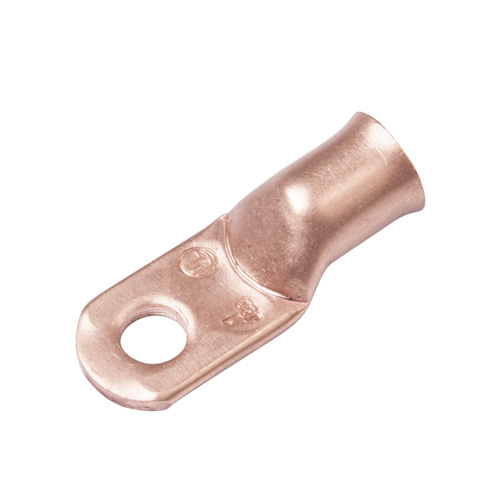
Straight battery lugs are the most common lug style and are used when the cable can run directly from the termination point without needing an angled exit. Their simple ring-and-barrel design makes them a dependable choice for general-purpose battery cable assemblies, grounding connections, starter circuits, busbars, solenoids, fuse blocks, and power distribution systems.
- Simple, cost-effective design for standard cable terminations
- Straight cable routing for open or accessible installations
- Broad compatibility with common cable sizes and stud sizes vailable in bare copper and tin-plated copper options
- Commonly used in automotive, marine, fleet, industrial, and heavy-equipment applications
Available in:
45° Bare Copper and Tinned Copper Lugs
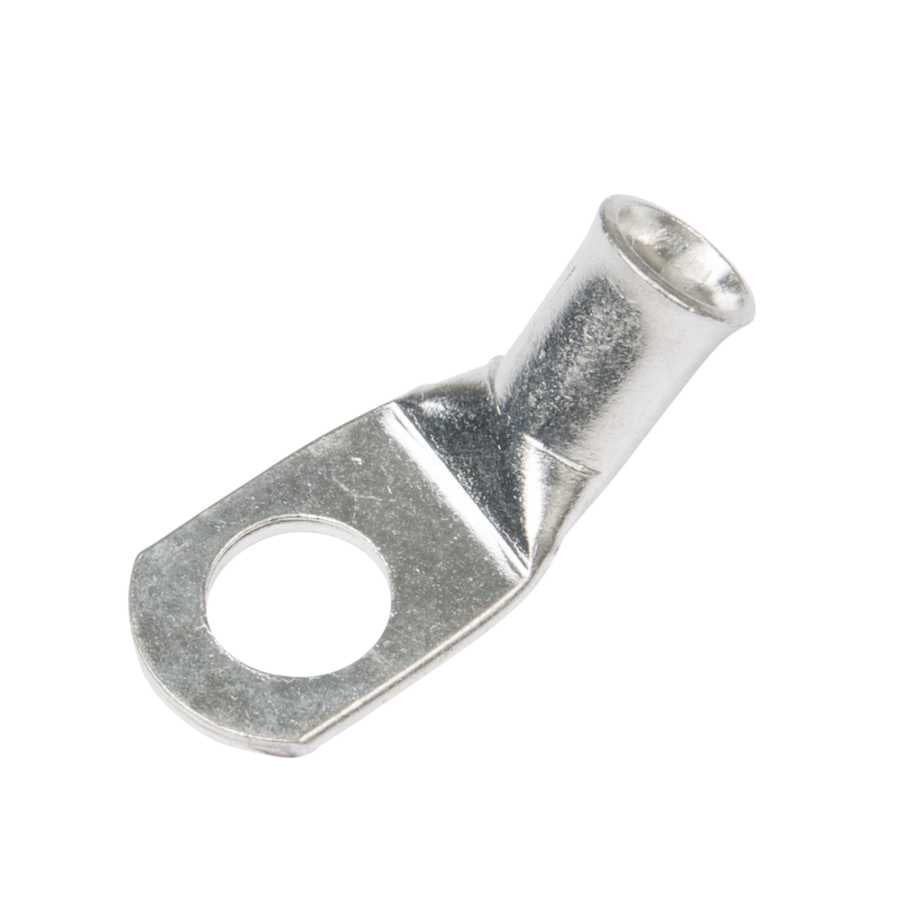
45-degree battery lugs help route cable away from the mounting stud at an angle, making them useful when straight lugs create interference with nearby components or require a tight bend in the cable. This angled design can reduce cable strain, improve clearance, and support cleaner cable routing in battery boxes, power distribution panels, equipment compartments, and other space-limited installations.
- Improved cable routing in tight spaces
- Reduced stress on large-gauge cable
- Added clearance around studs, terminals, and stacked connections
- Available in bare copper and tin-plated copper options
- Commonly used in automotive, marine, fleet, and heavy-equipment applications
Available in:
90° Bare Copper and Tinned Copper Lugs
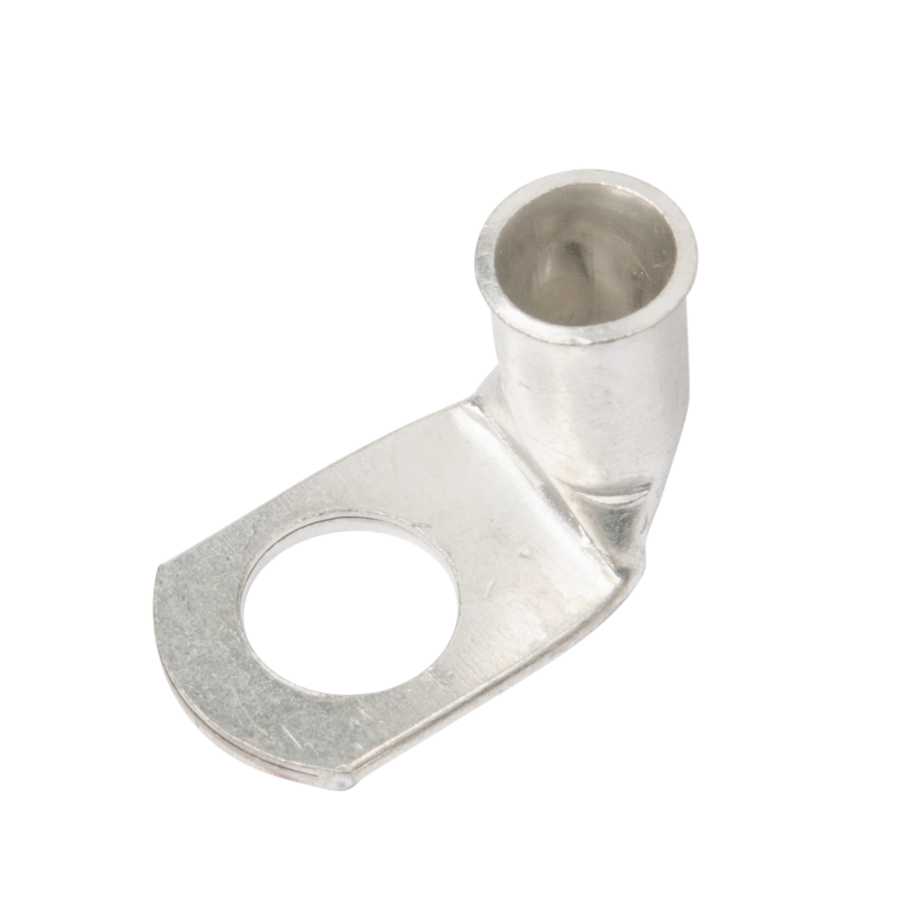
90-degree battery lugs route cable at a right angle from the mounting point, making them ideal when the cable needs to exit vertically or horizontally in a confined area. They are often used where straight lugs would force the cable into a sharp bend or where equipment layout requires the cable to run close to a panel, battery tray, busbar, or terminal block.
- Maximum space savings for tight installations
- Reduced cable bend radius stress
- Cleaner routing along panels, battery compartments, and equipment frames
- Useful for high-current connections where cable positioning is critical
Available in:
Heavy-Duty Tin Platted Copper Lugs
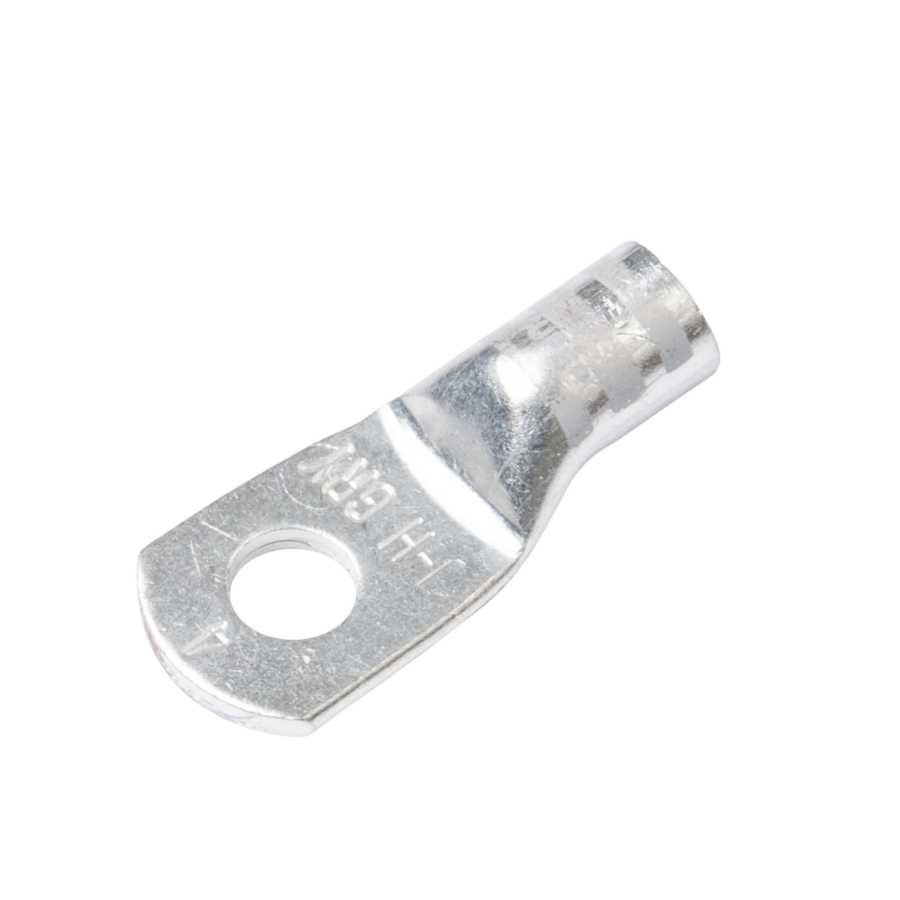
Heavy-duty copper lugs are manufactured with thicker walls and increased material mass to withstand higher mechanical loads and vibration. These lugs are commonly used in applications where equipment experiences constant movement, shock loading, or harsh operating environments.
- Increased durability
- Improved resistance to vibration
- Enhanced mechanical strength
- Suitable for construction and heavy equipment
Available in:
Heavy Duty Die Cast Copper
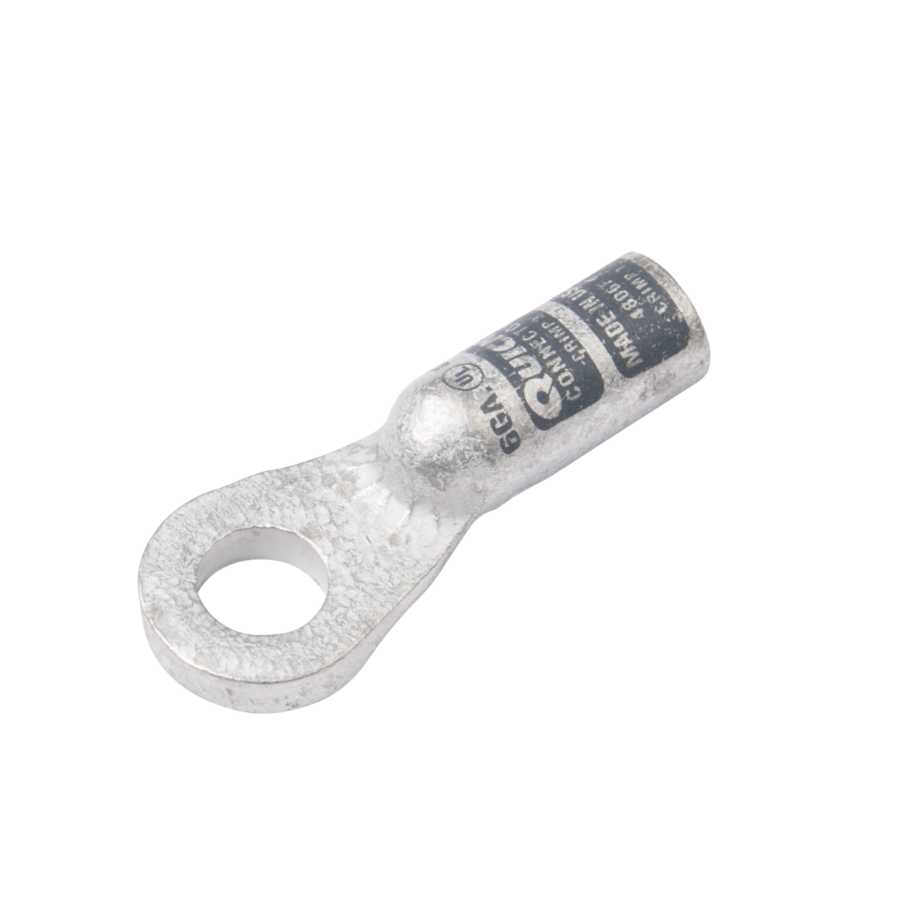
Heavy-duty die-cast copper crimp lugs are designed for demanding electrical systems that require a strong mechanical connection and dependable current transfer. Their die-cast copper construction provides a durable body for high-current cable terminations, while the crimp barrel helps create a secure connection when installed with the proper crimping tool.
- Durable copper construction for high-current applications
- Strong crimp connection for vibration-prone environments
- Suitable for large-gauge battery cable
- Designed for automotive, fleet, construction, and industrial equipment
- Helpful for applications that require added mechanical strength
Available in:
Fusion Lugs

Fusion copper lugs are pre-loaded with measured solder and flux inside a tin-plated copper connector. During installation, the lug is heated, the stripped cable is inserted, and the solder flows around the conductor strands to create a strong electrical bond. This design provides a reliable connection without the need for a traditional crimping tool, making Fusion lugs a practical option for installers who prefer soldered terminations or need a consistent installation process.
- Built-in solder and flux for consistent installation
- Tin-plated copper construction for corrosion resistance
- Strong electrical contact throughout the cable strands
- No heavy-duty crimping tool required
- Heat shrink recommended for added environmental protection
Available in:
Copper Compression Lugs
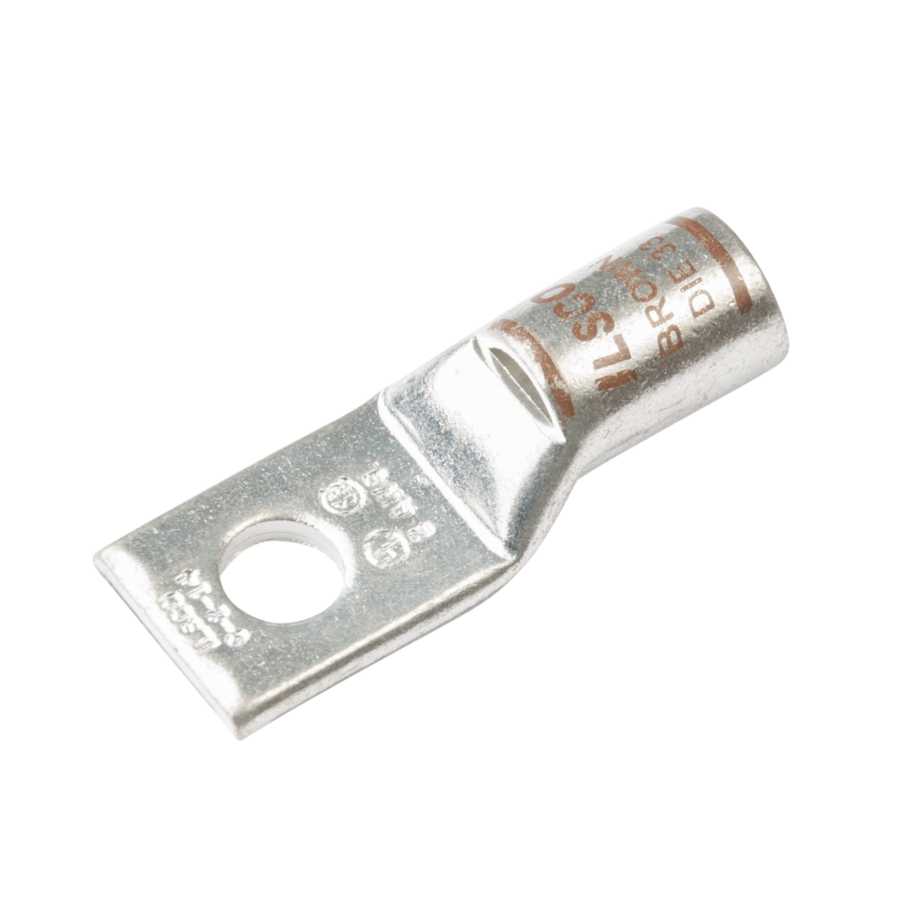
Compression battery lugs are designed for quick installation using ordinary hand tools. Instead of using a crimping tool, the stripped cable is inserted into the lug and secured by tightening the included compression nut. This makes compression lugs especially useful for field repairs, service work, and applications where a crimper is not available.
- No crimping tool required
- Fast installation with basic hand tools
- Useful for field repairs and maintenance work
- Tin-plated cast copper alloy construction for corrosion resistance
- Color-coded compression nuts for easier gauge identification
Available in:
Anti-Roatation Crimp Lugs

Anti-rotation battery lugs are designed to help prevent the lug from turning after installation. This is especially useful in high-vibration environments or applications where cable movement, equipment motion, or repeated service work can cause standard lugs to shift over time. By helping keep the lug aligned on the stud, anti-rotation designs support a more secure connection and reduce stress on the cable assembly.
- Helps prevent lug movement after installationImproves connection stability in vibration-prone applications
- Supports cleaner cable alignment and routing
- Helps reduce strain on the cable and mounting hardware
- Useful for fleet vehicles, heavy equipment, marine systems, and industrial power connections
Available in:
Types of Battery Terminals
Battery terminals are available in several styles to support different battery designs, cable routing needs, and installation environments. The right terminal style helps create a secure connection at the battery post while reducing cable strain, improving conductivity, and making it easier to fit cables within tight engine compartments, marine battery boxes, equipment panels, and other confined spaces.
Straight Battery Terminals
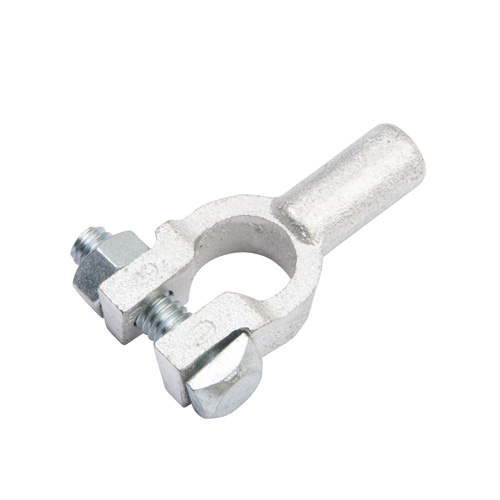
Straight terminals are the most common terminal style and are suitable for general-purpose battery connections. They offer a simple design and are commonly found in automotive and commercial vehicle applications.
- Simple, cost-effective design for standard battery connections
- Easy installation in automotive and commercial vehicle applications
- Reliable electrical contact for starting and charging systems
- Compact profile for installations with straightforward cable routing
Available as:
Flag or Parallel Battery Terminals
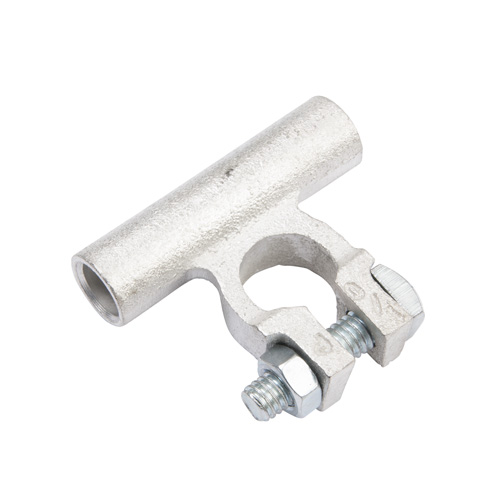
Flag or parallel terminals allow multiple cable connections at a single battery post.
- Additional accessory connections
- Simplified wiring layouts
- Reduced need for additional junction points
These terminals are popular in vehicles equipped with winches, auxiliary lighting, inverters, and other aftermarket accessories.
Available as:
Right-Angle and Left-Angle Battery Terminals
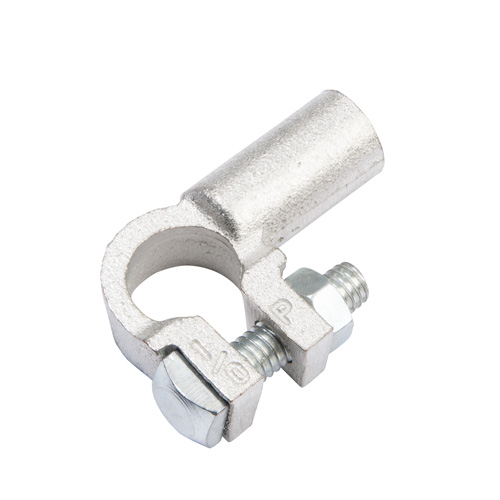
When battery compartments provide limited space, angled terminals help route cables efficiently while reducing strain on the cable assembly.
- Improved cable routing
- Reduced bend radius stress
- Better fit in confined spaces
Available as:
Brass Battery Terminals

Brass terminals are frequently used in marine environments due to their excellent corrosion resistance and durability.
- Strong corrosion resistance
- Long service life
- Reliable electrical performance in wet environments
Available as:
Lead Battery Terminals
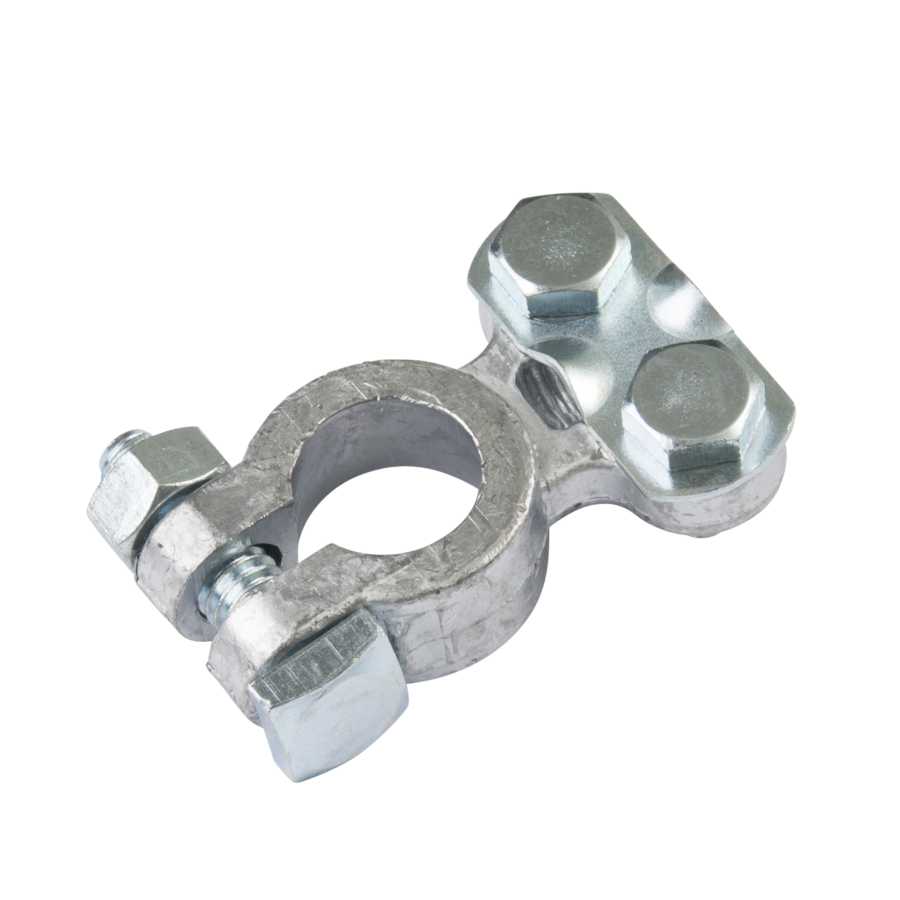
Lead terminals are commonly found in OEM and heavy-duty battery applications.
- Excellent compatibility with lead battery posts
- Durable mechanical connection
- Common in commercial and industrial equipment
Available as:
Lead-Free Battery Terminals
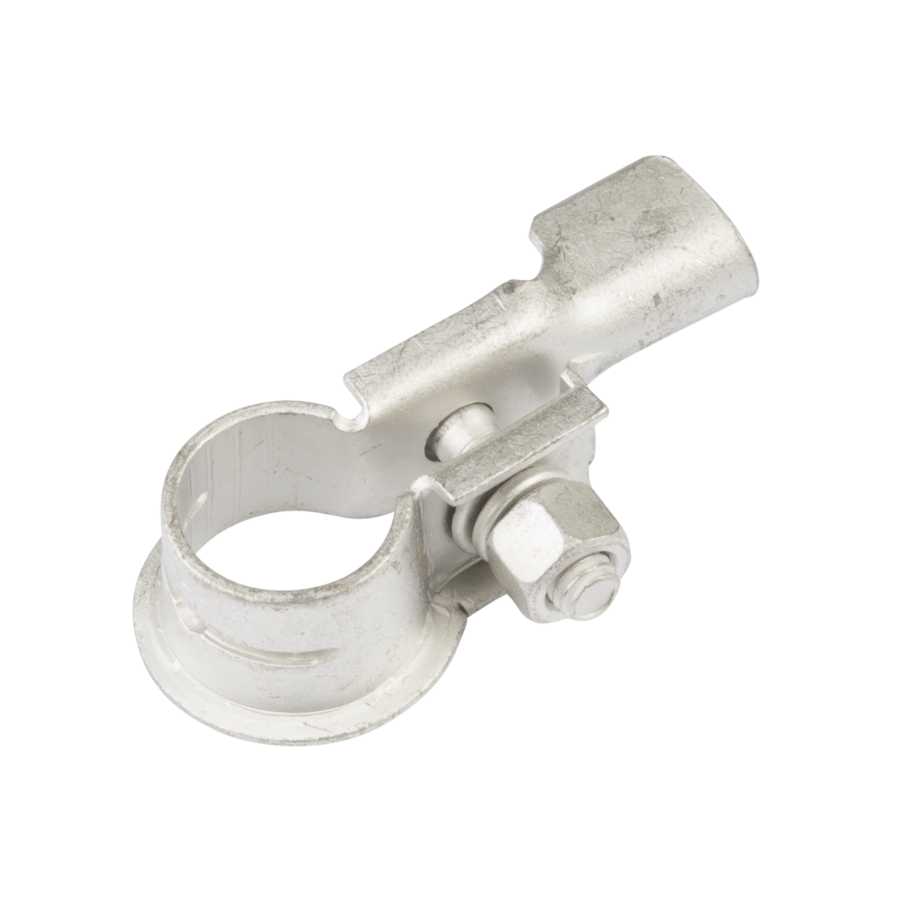
Lead-free battery terminals provide many of the performance benefits of traditional battery terminals while helping organizations meet environmental and regulatory requirements.
- Lead-free construction
- RoHS-compliant options available
- Excellent conductivity
- Corrosion-resistant finishes
- Suitable for light- and medium-duty applications
Fusion Battery Terminals

Fusion battery terminals combine the terminal, solder, and flux into a single assembly. During installation, heat is applied to melt the internal solder, creating a secure connection without the need for a traditional crimping tool.
- Built-in solder and flux
- Consistent electrical connection
- No heavy-duty crimping equipment required
- Excellent conductivity
- Suitable for automotive, marine, heavy equipment, and commercial vehicle applications
Fusion terminals are often selected by installers looking for a reliable connection when crimping tools are unavailable or when a soldered connection is preferred. Del City’s Fusion terminal line incorporates built-in flux and solder to simplify installation while helping create a solid connection throughout the cable strands.
Available in:
Compression Battery Terminals
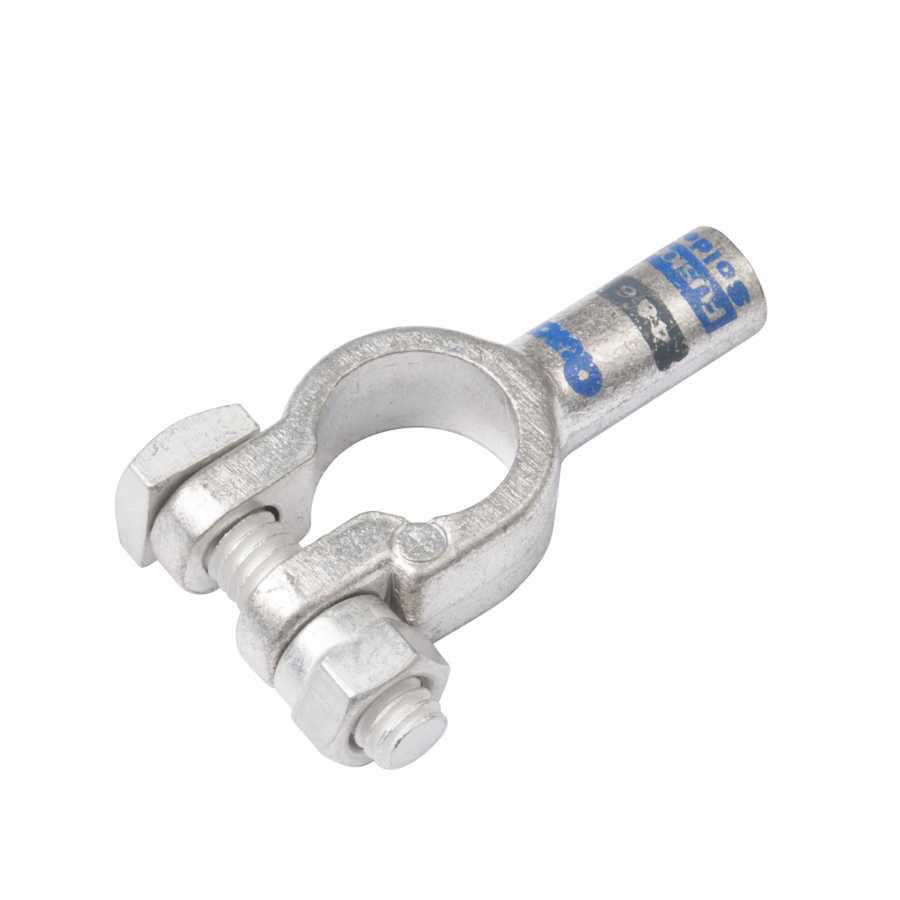
Compression battery terminals are designed for fast installation without specialized crimping equipment. Instead of crimping, a compression nut mechanically secures the cable within the terminal body.
- No crimping tool required
- Quick field installation
- Ideal for emergency repairs
- Tin-plated construction for corrosion resistance
- Available in straight, flag, left-angle, and right-angle configurations
These are particularly useful for service technicians and fleet maintenance personnel who need to make repairs in the field using only basic hand tools. Del City’s compression terminals utilize tin-plated cast copper alloy construction and include color-coded compression nuts for easy cable size identification.
Available in:
Terminal Style Comparison Chart
| Terminal Style | Best For | Space Savings | Multiple Connections |
|---|---|---|---|
| Straight Copper | General-purpose installations | Low | No |
| Parallel Copper | Accessory Connections | Medium | Yes |
| Left or Right Angle | Tight Compartments | High | No |
| Brass | Marine, Corrosive Environments | Medium | No |
| Lead | Heavy-duty and commercial vehicles | Low | No |
| Lead-Free OEM | Automotive replacement applications | Low | No |
| Fusion | Fast soldered installations | Medium | Yes |
| Lead | Heavy-duty and commercial vehicles | Low | No |
| Compression | Field repairs and service work | Medium | Yes |
Conclusion
From building battery cables and upgrading charging systems to maintaining fleet equipment, choosing quality components and proper installation practices helps ensure safe, efficient power delivery.
Del City offers a complete selection of battery cables, battery lugs, battery terminals, heat shrink tubing, and crimping tools to help you build dependable electrical connections for automotive, marine, industrial, and heavy-duty applications.